
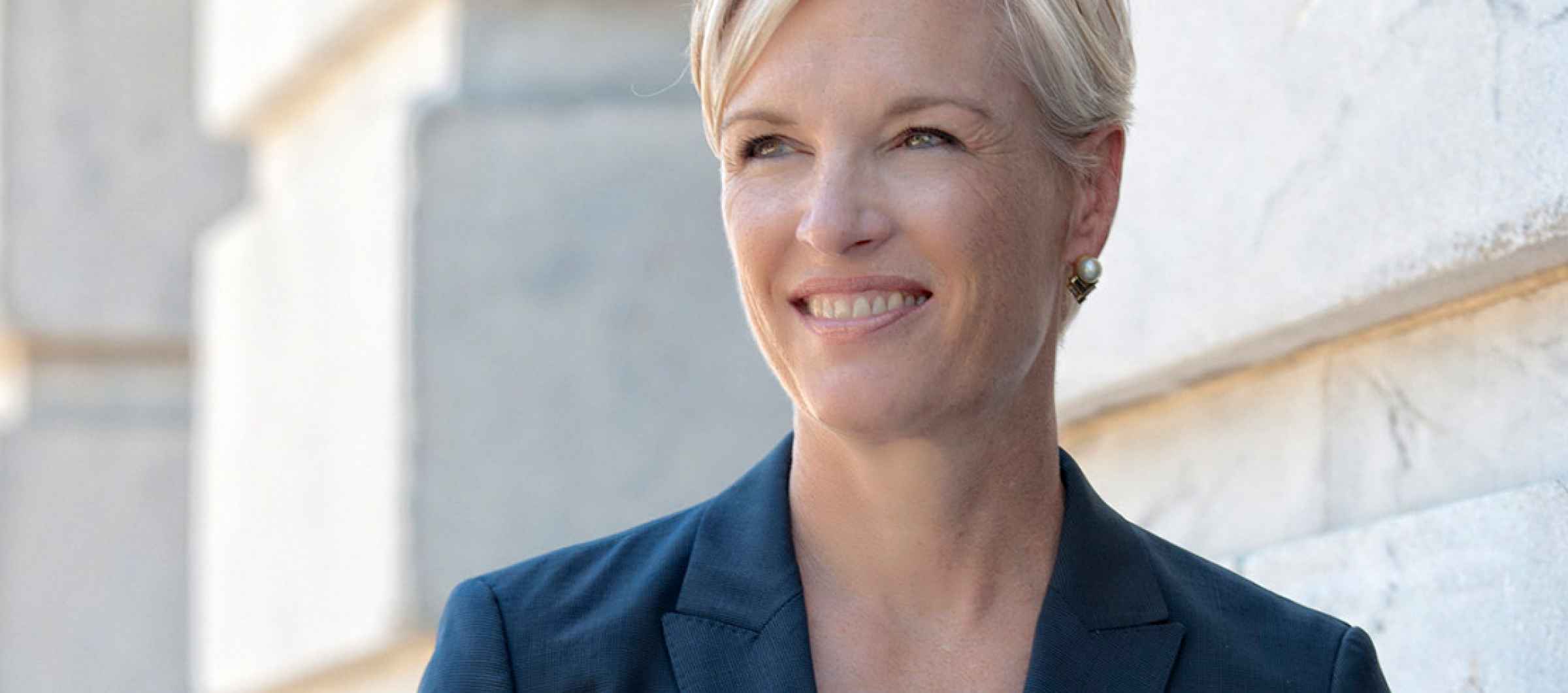
Today, as on many other days, I told myself, “Be more Cecile.” Cecile is Cecile Richards, the marvel of a human best known as the president of Planned Parenthood.
Written by Louise Melling, Deputy Legal Director and Director of Ruth Bader Ginsburg Center for Liberty, ACLU
Today, as on many other days, I told myself, “Be more Cecile.” Cecile is Cecile Richards, the marvel of a human best known as the president of Planned Parenthood. Cecile died January 20th. She will always live in my heart as someone who showed me, and so many others, how to be fierce and loving and curious and to be all in on life.
Today, I join the American Civil Liberties Union (ACLU) community to mourn Cecile, a one-in-a-generation leader who forever altered the trajectory of women’s rights and reproductive freedom in this country. I pledge to honor Cecile by taking action, to do right by others, guided by the question, "WWCD" (What Would Cecile Do)?
I’ve known Cecile for years through our work in the abortion space and mutual friends. We’ve stood together in the press scrum on the steps of the Supreme Court and at rallies; we’ve enjoyed many a cheese and crackers plate on Amtrak journeys between New York and DC; and I’ve eaten many a bowl of her chili at pre-Thanksgiving parties with family and friends at her apartment.
Cecile’s accomplishments are legion. For more than a decade, she pioneered Planned Parenthood’s efforts to expand access to birth control and other reproductive care under the Affordable Care Act, to expand its reproductive care services, and to fight abortion restrictions and bans long before Roe v. Wade was overturned. She built Planned Parenthood into a political force, with the power to demand change on the national stage and in private meetings at the White House. Every politician knew who she was. Everyone in my not-too-political family also knew. Cecile understood that disruption — of the status quo, of the majority voice, of expectation — was how change is made, no matter how uncomfortable that may be. It’s so fitting that her book was called, “Make Trouble.”
After leading Planned Parenthood for more than a decade, Cecile continued advancing womens’ rights and gender justice when she co-founded Supermajority, a women’s political action group that seeks to train and mobilize women to be organizers, activists, and leaders. Even after she was diagnosed with a glioblastoma, a terminal brain cancer she described as treatable, but not curable, Cecile couldn’t stop. Last fall, she co-founded Abortion in America, an organization dedicated to uplifting the voices of those denied health care because of state abortion bans. As a friend observed, Cecile is like a racehorse, restless for the chance to run.
Cecile started her career in the labor movement, working as an organizer for service workers including garment workers, nursing home workers, and janitors. She later served as deputy chief of staff for former Speaker Nancy Pelosi. She came from a distinguished background: She was the daughter of Ann Richards, the first woman governor of Texas, and David Richards, a civil rights lawyer. She learned early that a political life was a life of action and activism.
Cecile was named one of TIME Magazine’s 100 Most Influential People in the World in 2011 and 2012. She was also awarded the Roger N. Baldwin Medal of Liberty, the ACLU’s highest honor acknowledging individuals who have made lifetime contributions to the advancement of civil liberties. Just last year, President Joe Biden awarded her the Presidential Medal of Freedom, one of the nation’s top civilian awards.
But it's not Cecile’s accomplishments that leave us so full of love and grief. It is Cecile the person. One night when I stopped by Cecile’s apartment, she stirred a sweet concoction she was making for her staff while asking about the ACLU’s next move in the abortion space. Another night, we met Italian tourists at one of her parties whom I swear she had met in line that day at a grocery store. Whenever Cecile traveled to the Planned Parenthood clinics, she would stop to connect with staff and patients. She brought people in.
When I saw Cecile during these last few months, she spoke not of the challenges of her illness, but of the stories she was hearing of women denied critical health care and of her grandson. Her question was always ‘what is necessary for change’ — a question rooted in the heart. That conviction and compassion made her fierce and loving. It meant she sat up straight and spoke with fire to defend Planned Parenthood in a notoriously hostile five hour Senate hearing a decade ago. It meant she kept organizing even as her health declined. It gave her the energy to travel the country to support change, and threaten to turn the political power of Planned Parenthood against those who stood in the way.
One of her traits I loved most was her gift as a communicator. Cecile could connect on a personal level with the president just as she could with a distraught 19-year-old denied health care. She spoke from her heart, with conviction, clear and plain. To her very core, Cecile was an organizer: of movements, friends, and family. She was curious and listened, concerned most about what people need as well as what brought them joy.
In a video tribute to Cecile, her husband Kirk and her children offered gorgeous insight into her. Her daughter, Lily, shared that when Cecile testified before Congress in that most hostile hearing, inside her binder packed with notes and data and charts was a picture of her three children when they were little. The lesson, Lily reflected, was “if you have a center, a touchstone, you can get through anything.”
I didn’t think there ever would be a force strong enough to stop Cecile. But now we have lost her.
To honor Cecile is to carry on her legacy. When the ACLU recently gave Cecile its Roger Baldwin award, our highest honor, Cecile ended her acceptance speech with the words, “Here’s to the work ahead.” To Cecile, thank you for showing us the way to be and here’s to the work ahead.