Federal Court Strikes Down Multiple Arkansas Laws Restricting Ballot Initiative Process
July 1, 2026 12:04 pm
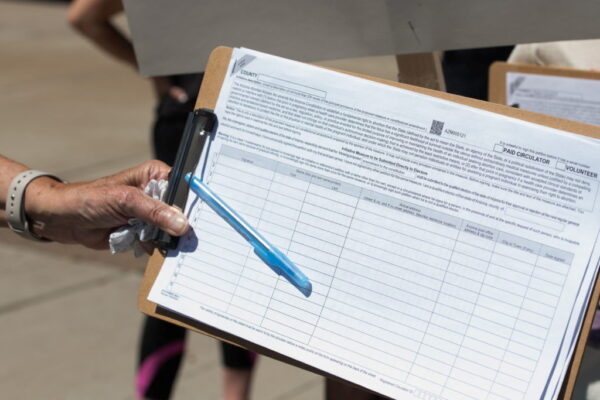
LITTLE ROCK, Ark. — A federal court has ruled that several Arkansas laws restricting the ballot initiative process violate the First Amendment, delivering a significant victory for Arkansans’ constitutional right to engage in direct democracy.
In League of Women Voters of Arkansas v. Jester, the United States District Court for the Western District of Arkansas granted summary judgment in favor of the plaintiffs and intervenor-plaintiffs on multiple constitutional claims, striking down provisions that burden core political speech and make it harder for Arkansans to propose laws through the ballot initiative process.
The court ruled unconstitutional laws that required canvassers to:
- read the ballot title aloud or have petition signers read the ballot title before signing,
- recite a government-scripted message that petition fraud is a crime,
- verify voters’ identification before they could sign petitions,
- publicly disclose paid canvassers’ personal information prior to signature gathering,
- submit additional post-circulation affidavits,
- pause signature collection during the petition process, and
- reimburse the state for publication costs.
The court also ruled in favor of two individual plaintiffs challenging Arkansas’s restrictions on disqualifying offenses that preclude someone from serving as a paid canvasser.
Several claims, including challenges to Arkansas’s residency and domicile requirements for canvassers and vagueness challenges to the state’s ID and reading requirements, will proceed to trial later this month.
“This ruling reaffirms a simple but essential principle: the First Amendment protects the right of Arkansans to organize, advocate, and engage in the political process without unnecessary government interference,” said John Williams, legal director of the ACLU of Arkansas. “The court recognized that the state cannot burden core political speech with unnecessary restrictions that chill participation and make it harder for people to exercise their constitutional right to bring issues directly to the voters.”
“Yesterday’s ruling is an important victory for the people of Arkansas and their constitutional right to direct democracy. The court struck down several of the Legislature's newest barriers to the citizen initiative process and reaffirmed that circulating petitions is protected political speech. This decision reinforces the constitutional principle that the initiative process belongs to the people. Regnant Populus,” said Protect AR Rights spokesperson Gennie Diaz.
“On Friday, Protect AR Rights submits signatures to the state for the Arkansas Ballot Measure Rights Amendment,” Diaz said. “Thousands of Arkansans have spent months exercising one of our state's most fundamental constitutional rights. We look forward to delivering those signatures on behalf of voters across the state.”
"We're thrilled by this ruling and proud to stand alongside Protect AR Rights, which has done amazing work to defend direct democracy rights for Arkansans. We are grateful that the court saw through many of the manufactured barriers the Legislature imposed on the citizen initiative process. The people of Arkansas, not the Legislature, hold the power of direct democracy," said Emma O. Sharkey, partner at Elias Law Group LLP.
“The court’s ruling was an important step in protecting Arkansans’ fundamental right to free speech in the ballot initiative process. The court’s determination that multiple laws making the ballot initiative process more difficult were unconstitutional underscores that lawmakers should spend less time violating Arkansans’ constitutional rights and more time helping Arkansas live up to its motto: Regnant Populus, The People Rule,” said Peter Shults, partner at Shults Law Firm.
Protect AR Rights and For AR Kids intervened in the case earlier this year after the Arkansas General Assembly enacted a slate of laws imposing new restrictions on ballot initiative campaigns. The groups challenged the laws as unconstitutional burdens on core political speech protected by the First and Fourteenth Amendments.
Protect AR Rights is a citizen-led coalition working to safeguard Arkansas’s ballot initiative process. For AR Kids is a grassroots coalition seeking to amend the education clause of the Arkansas Constitution.
The case will proceed to trial on the remaining claims beginning July 28 in the U.S. District Court for the Western District of Arkansas.
Related Issues
Related Content

Arkansans Are Losing Their Voice — We’re Going to Court to Get It Back

Grassroots Groups Move to Intervene in Ballot Measure Case to Defend First Amendment Rights
Stay Informed
Sign up to be the first to hear about how to take action.
By completing this form, I agree to receive occasional emails per the terms of the ACLU’s privacy statement.
By completing this form, I agree to receive occasional emails per the terms of the ACLU’s privacy statement.