
Federal Court Rules Ten Commandments Monument at Arkansas State Capitol is Unconstitutional
April 1, 2026 10:00 am
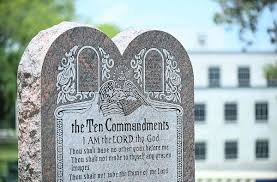
LITTLE ROCK, Ark. — In a major victory for religious freedom and the constitutional principle of church-state separation, a federal court ruled that the Ten Commandments monument on the Arkansas State Capitol grounds violates the First Amendment.
In a detailed, 148-page opinion, the United States District Court for the Eastern District of Arkansas concluded that the monument and the law requiring its display violate the Establishment Clause, finding that the State’s action promotes a specific religious doctrine over others and over nonreligion.
The court relied upon a long established, core constitutional principle: the government must remain neutral in matters of faith. As the opinion makes clear, the Establishment Clause “mandates governmental neutrality between religion and religion, and between religion and nonreligion,” and prohibits the government from conveying a message that a particular religious belief is “favored or preferred.”
The American Civil Liberties Union of Arkansas brought the case on behalf of a group of Arkansans who regularly use the Capitol grounds and challenged the monument as an unconstitutional endorsement of religion.
“This ruling is a powerful reaffirmation of a simple, essential principle: the government has no business mandating or meddling in American’s religious beliefs,” said Holly Dickson, Executive Director of the ACLU of Arkansas. “Our Constitution protects every person’s right to believe — or not believe — without government interference. When the state elevates one set of religious beliefs above others, it undermines that promise and sends a message that some Arkansans matter more than others. From our nation’s founding and the American Revolutionary War to the adoption of the First Amendment to the United States Constitution and enduring constitutional precedent, it is clear that government preference for, or interference with, particular religious beliefs violates our fundamental rights.”
In its ruling, the court rejected the State’s argument that the Ten Commandments are foundational to American law, noting instead a broad range of historical influences — including the Magna Carta, English common law, and Enlightenment principles — none of which rely on or even reference the Ten Commandments.
The court also found that the monument’s origins and purpose were overtly religious. The law mandating the monument was enacted specifically to “commemorate the Ten Commandments,” and the monument itself was funded largely by religious organizations. Taken together, the court concluded, the evidence showed that “the primary purpose” of the law was to promote religion and that its effect was to advance one faith over others.
“This decision carefully walks through both history and precedent and reaches the right conclusion: the state cannot take sides in matters of religion,” said John Williams, Legal Director of the ACLU of Arkansas. “The Constitution requires government neutrality — not favoritism, not endorsement, and not promotion of religious doctrine. That principle protects everyone, regardless of what they believe.”
The court further distinguished this case from others involving longstanding monuments, noting that Arkansas’s display lacked the historical context or secular purpose necessary to pass constitutional muster. Instead, the monument was a newly mandated, stand-alone display of a religious text placed prominently on government property.
“All Arkansans should take note of the Court's finding, which echoes that of other courts: the state has failed to prove its assertion that the Ten Commandments are a historical basis for the legal system of the United States and the State of Arkansas,” said John Burnett, cooperating attorney on the case.
“Permanent monuments on government property must comply with the Constitution,” said Andy Schultz, cooperating attorney on the case. “Here, the state crossed that line by endorsing a specific religious message and placing it at the seat of government.”
The plaintiffs, who include Arkansans of diverse religious and nonreligious backgrounds, challenged the monument because of the exclusionary message it sent.
“No one should feel like an outsider in their own state because of their beliefs,” said plaintiff Donna Cave. “This decision affirms that our government belongs to all of us.”
“This case has always been about ensuring that Arkansas remains a place where people of all faiths — and no faith — are treated equally under the law,” Dickson added. “We will continue to stand up for that promise and to hold the government accountable when it falls short.”
Related Content

Court Blocks Arkansas Law Requiring Ten Commandments in Every Public School Classroom and Library

Families Ask Court to Add Conway School District to Lawsuit Against Arkansas Ten Commandments Law

Federal Court Blocks Lakeside School District from Posting Ten Commandments
Stay Informed
Sign up to be the first to hear about how to take action.
By completing this form, I agree to receive occasional emails per the terms of the ACLU’s privacy statement.
By completing this form, I agree to receive occasional emails per the terms of the ACLU’s privacy statement.